
Private wealth is becoming an increasingly important source of capital for private markets. For asset managers, this presents a huge opportunity to access a much wider pool of investors, therefore building a more diversified and durable route to growth.
Why are private markets opening to private wealth?
For years, private market fundraising was dominated by institutional allocations such as pension funds, insurers, sovereign wealth funds, and large family offices. These investors typically committed large amounts to traditional closed-end funds.
That model remains important, but it is no longer the only engine of growth. Across Europe, regulatory change, product innovation, and wider distribution networks are making private markets more accessible to individual investors.
Which fund structures are driving the shift to private wealth?
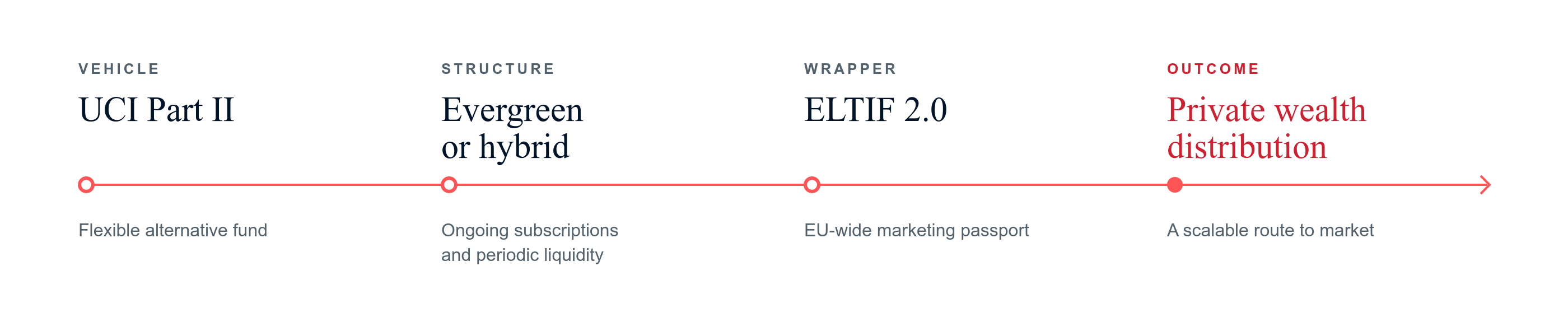
Luxembourg UCI Part II funds are the underlying vehicles offering the most flexibility across alternative strategies. These vehicles can accept any type of investor - including individuals - without minimum subscription thresholds, making them the natural starting point for managers building products aimed at wealth channels.
Within a Part II vehicle, managers can structure funds as evergreen or hybrid. These are open-ended structures that offer ongoing subscriptions and periodic liquidity rather than the fixed entry/exit points of traditional closed-ended funds. This is what makes them workable for wealth platforms and private banking distribution.
ELTIF 2.0 (European Long-Term Investment Fund) is a regulatory wrapper that an eligible Part II fund can adopt. Adding the ELTIF wrapper unlocks the EU-wide marketing passport, letting managers distribute to retail and professional investors across the EU rather than being limited to Luxembourg or bilateral local marketing arrangements. This is what turns a well-structured alternative fund into something truly scalable for private wealth.
The appeal of these structures is already showing up in the data:
- Active UCI Part II funds reached 301 in 2025, up from 230 in 2021 (CSSF).
- Assets under management (AuM) for evergreen and hybrid structures in Luxembourg nearly doubled under a year (KPMG).
- Around 33% of European wealth investors are already invested in an ELTIF, while 44% intend to invest within the next three years (Preqin and BlackRock).
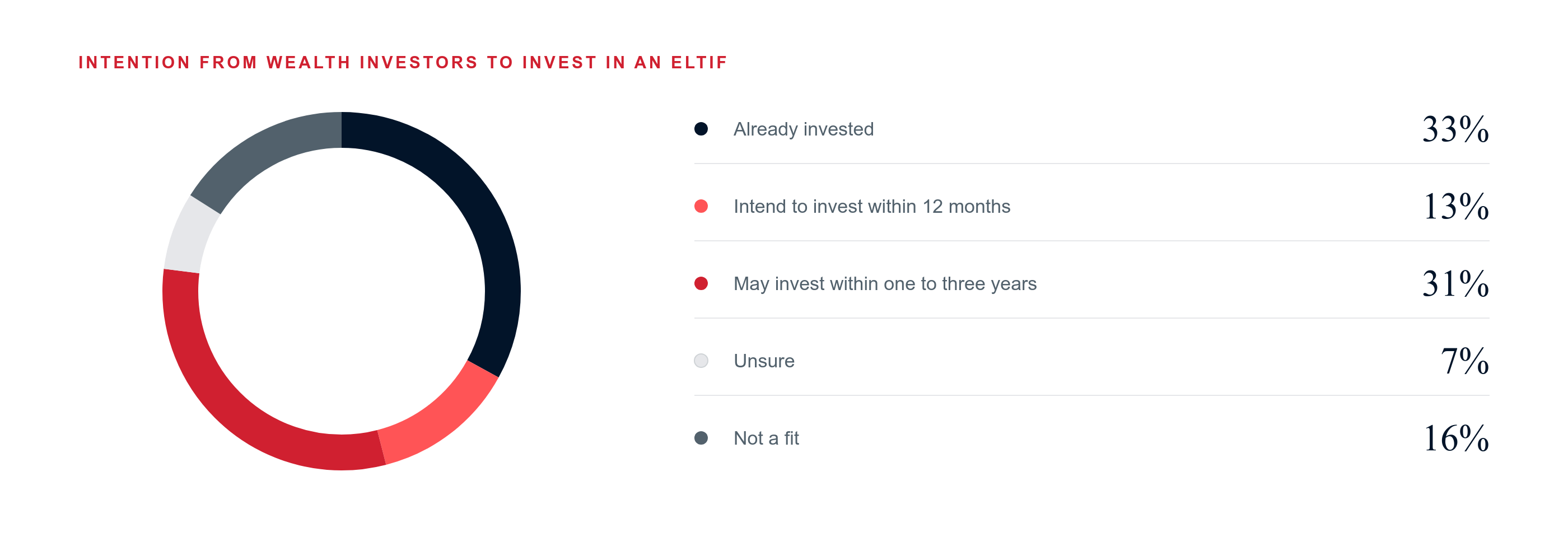
Source: Preqin and BlackRock European Private Wealth Survey, 2025
Why does private wealth matter to asset managers?
Private wealth represents a large and relatively under-penetrated pool of long-term capital. As institutional fundraising becomes more competitive and traditional channels become crowded, wealth investors offer a new route to growth, diversification, and more durable capital formation.
For wealth investors, the appeal is equally clear. Private markets can provide access to return streams, income profiles and diversification benefits that are not always available in public markets. State Street’s 2025 EMEA Wealth Management Survey found that 53% of wealth managers expect to increase allocations to private equity and 42% to private credit within the next three to five years.
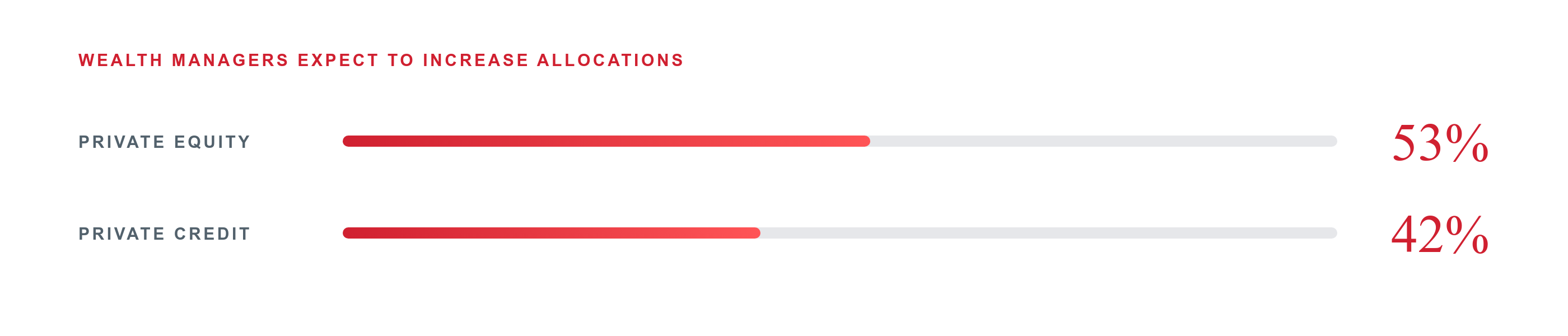
Source: State Street EMEA Wealth Management Survey, 2025
Asset managers are not just following investor demand. They are responding to a structural shift in where the next wave of private market capital is likely to come from.
For asset managers, this means private wealth is becoming difficult to ignore. Firms that build credibility and distribution in the channel now may be better placed to capture the next wave of private market growth.
Why should managers act now?
The opportunity is taking shape now, with wealth managers and advisers deciding which private market products - and which asset managers - to work with as demand grows. Managers that move early can build distribution relationships, establish credibility, and secure a place in portfolios before the channel becomes more crowded.
Building the operating model takes time, however. Serving private wealth is fundamentally different from serving a small number of institutions: the same AuM target may involve hundreds or thousands of investors, each requiring onboarding, AML/KYC checks, transaction processing, reporting, and ongoing support. Managers that wait for demand to mature before investing in these capabilities risk being unable to scale when capital is ready to move.
| Institutional model | Private wealth model |
|---|---|
| Fewer investors | Hundreds or thousands of investors |
| Larger commitments | Smaller individual commitments |
| Concentrated servicing | High-volume servicing |
| Manual processes may suffice | Scalable digital infrastructure is required |
The imperative is therefore to build the infrastructure and distribution model now so that growth in investor demand can translate into profitable AuM rather than greater operational complexity.
What comes next?
The strategic case for private wealth is clear. The next question is how managers can win that capital without allowing investor volume and operational costs to rise together.
Winning private wealth capital requires more than creating an accessible fund structure. Managers also need an operating model that can handle higher investor volumes without allowing cost and complexity to rise at the same pace.
In our follow-up article, How to service private wealth capital in the evergreen era, we explain how managers can create a scalable service for wealth investors while maintaining control and a high-quality investor experience.
Want to talk it through with our team?
If you are exploring whether private wealth could become a growth channel for your funds, speak to the Goji team. We can share a practical view of the market and the questions to consider before shaping your approach.