

Fund administrators are under growing pressure to deliver more efficient, compliant, and scalable services to asset manager clients. Manual onboarding, fragmented systems, and repetitive operational processes can slow service delivery and make growth harder to sustain.
Many administrators use point solutions to digitise isolated tasks. By opting for a unified, end-to-end investor servicing platform, administrators can streamline the entire journey and avoid a fragmented tech stack. Modern platforms bring together API-led connectivity, AI-enabled efficiency, and centralised reporting to consolidate investor servicing into a single operating model that supports scalable growth.
In this guide, we outline the key capabilities fund administrators should evaluate when choosing a technology provider for investor servicing.
Why do fund administrators need technology for investor servicing?
The traditional fund administration operating model is under strain. As private markets expand across jurisdictions, investor types, fund structures, and reporting requirements, many operating models are too fragmented and manual to scale efficiently.
The industry is signalling a shift toward outsourced expertise backed by sophisticated and innovative technology. A recent study from Ocorian found that 81% of surveyed private equity (PE) firms plan to increase their use of third party providers, and when selecting these partners, they now prioritise responsiveness to emerging technology as a top-tier criterion.
This is unsurprising as rapid progress in AI research and innovation opens up new possibilities for efficiency gains across the industry. With 84% of PE funds expecting AI to have a transformative impact on their business, administrators must see innovation as a priority. The challenge is a delicate balancing act: delivering rapid technological innovation while maintaining the rigorous oversight and governance required in a highly regulated industry.
Data: Ocorian, 2025. EY, 2025. State Street, 2025.
Modern and innovative tech platforms enable firms to move away from people-powered scaling, where new headcount was required to manage growth. Success now depends on infrastructure that reduces operational drag through end-to-end digitisation and automation, allowing firms to scale capacity without the friction of manual coordination.
To achieve this outcome, administrators first need to understand what end-to-end digitisation looks like in practice.
What does end-to-end digitisation look like for fund administrators?
For fund administrators, end-to-end digitisation means supporting the entire investor servicing lifecycle on one connected platform, from onboarding and KYC to subscriptions and reporting.
Disconnected workflows create rekeying delays and unnecessary operational risk. A strong platform should reduce spreadsheet dependency and consolidate data into a more usable operating environment.
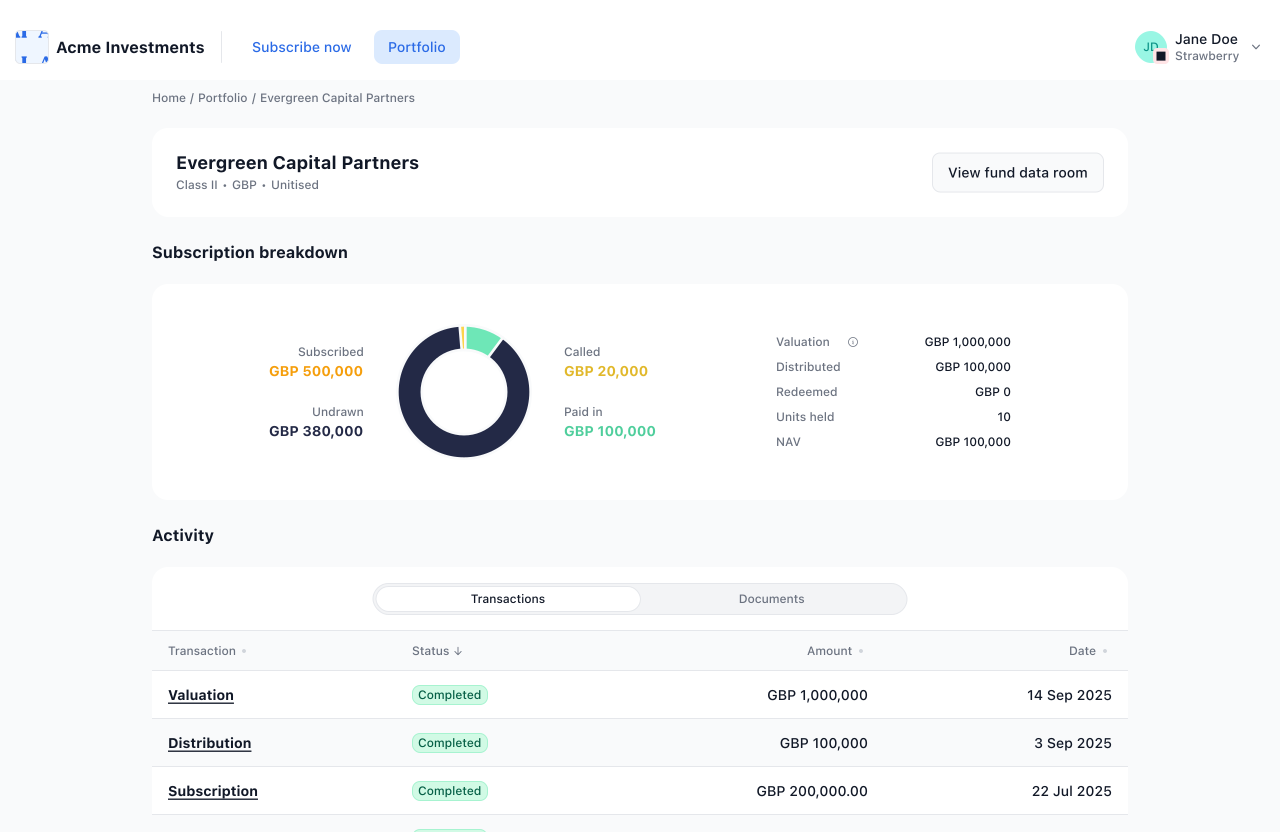 Centralised reporting on the Goji platform
In practice, fund administrators should look for technology that can:
- digitise investor onboarding and information capture
- support KYC and AML workflows and ongoing monitoring
- remove paper-based inefficiencies with standardised, digital fund subscription processes
- provide centralised, transparent reporting for teams and investors
- capture investor data once and reuse it across future processes and investments
When evaluating providers, fund administrators should consider whether the solution covers the entire investor servicing lifecycle. If not, does the solution integrate with the fund administrator’s existing tech stack, or will it leave the process fragmented?
How can AI be leveraged for private fund investor servicing?
Once a unified digital foundation is in place, fund administrators can leverage AI to reduce repetitive administration and scale without proportionate headcount growth.
AI integration is one of the biggest shifts occurring across fund servicing today. A recent survey from State Street found that 83% of surveyed GPs and LPs are planning out cases to utilise AI in their operations, in particular to generate analysable data out of unstructured private markets information. To stay competitive, fund administrators should be considering how to integrate AI into their operations.
AI is increasingly being embedded into repeatable, time-intensive workflows such as data validation and document review, enabling human teams to focus more on oversight and client engagement.
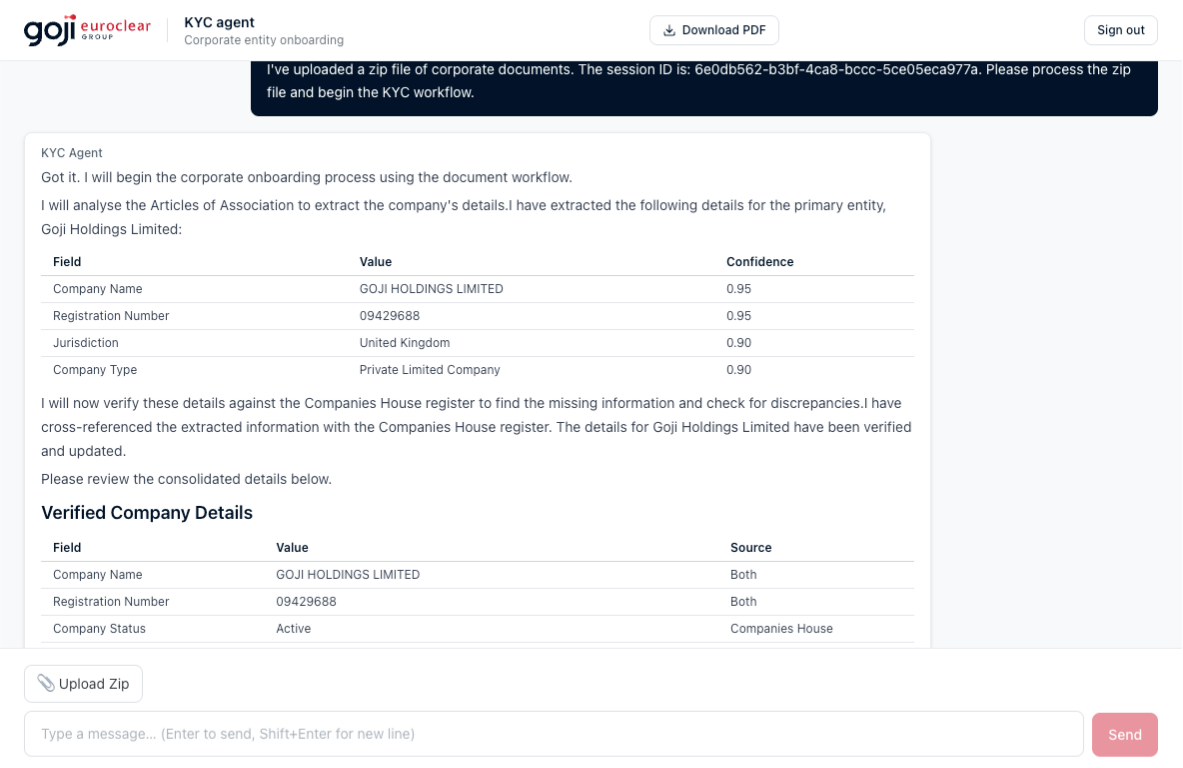 AI-enabled KYC agent on the Goji platform
For fund administrators, the best near-term applications of AI are likely to be:
- data extraction and verification from complex document packs
- faster, low-friction onboarding support
- reduced manual processing in resource-intensive workflows
- support for scaling service delivery without linearly expanding teams
But where AI is being considered, governance also matters. Fund administrators should be cautious of vague AI claims and instead ask whether the AI is purpose-built, embedded into real workflows, auditable, and subject to human approval. Platforms should treat AI as a governed execution layer that sits on top of robust technological infrastructure.
What compliance and control capabilities should your investor servicing technology provide?
In a modern platform, compliance should not sit outside the workflow. For fund administrators, the strongest technology platforms build KYC, AML, document collection, approvals, and auditability directly into day-to-day operations.
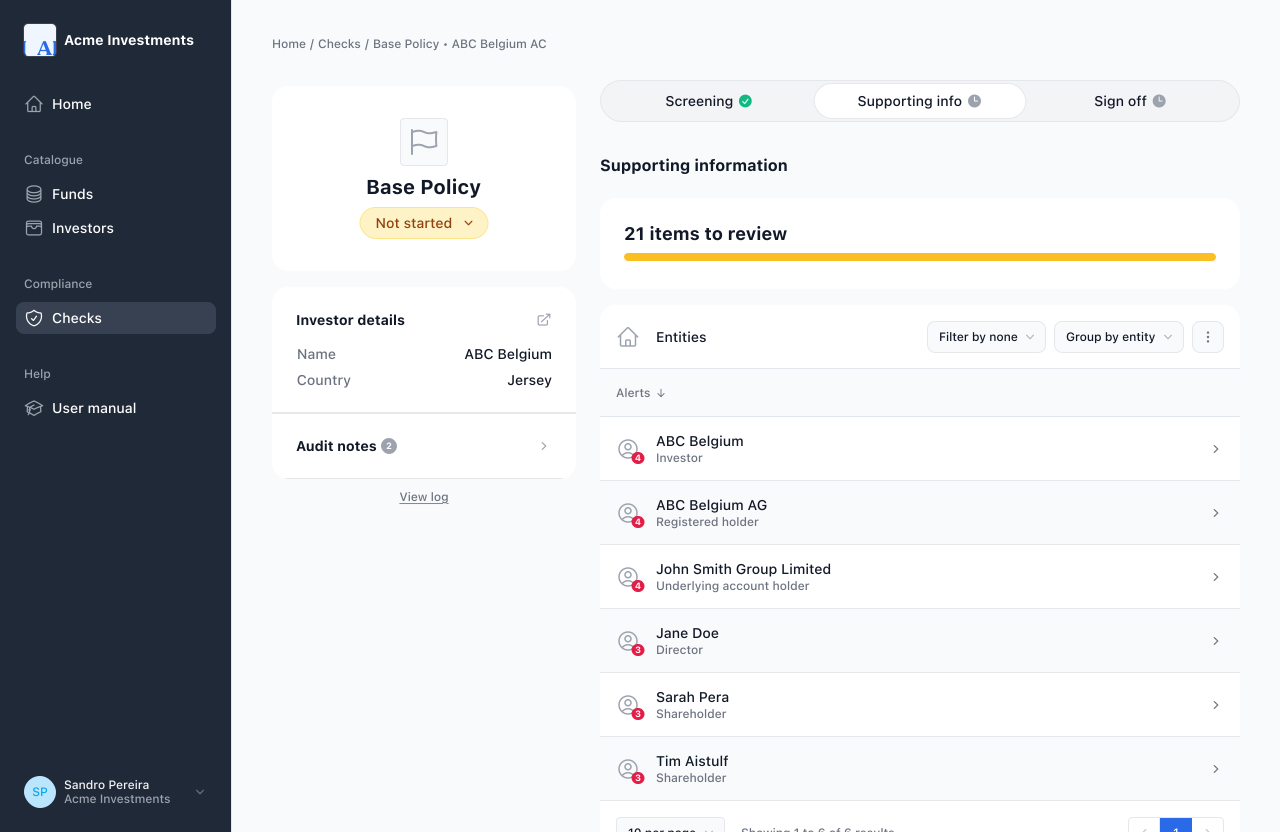 Automated compliance on the Goji platform
This is especially important in cross-border environments where navigating differing regulatory frameworks can create operational fragmentation. A recent whitepaper from Euroclear and Travers Smith broke down many of the operational hurdles that appear when operating across borders, including fragmented regulatory compliance, onboarding, AML, and reporting standards.
At a minimum, fund administrators should look for:
- configurable KYC and AML workflows
- ongoing monitoring, re-certification reminders, and tracking
- document requests tailored by jurisdiction or investor type
- tracked review and approval status
- clear audit trails and built-in governance workflows
In other words, the right solution should improve both efficiency and control. If technology speeds up the process but weakens oversight, it creates a new type of risk.
To keep control and compliance consistent across a firm’s entire ecosystem, modern tech platforms must also be able to communicate fluently with other internal systems.
Why does system integration matter for fund administrators?
Integrations matter because fund administration is rarely contained to one system. If onboarding, transaction data, reporting, documents, and operational records sit across disconnected tools, teams waste valuable time moving information around.
A strong platform for investor servicing should support API-led connectivity to synchronise data in real time and reduce manual re-entry. APIs can enable integration with CRM platforms, fund accounting systems, and internal back-office infrastructure.
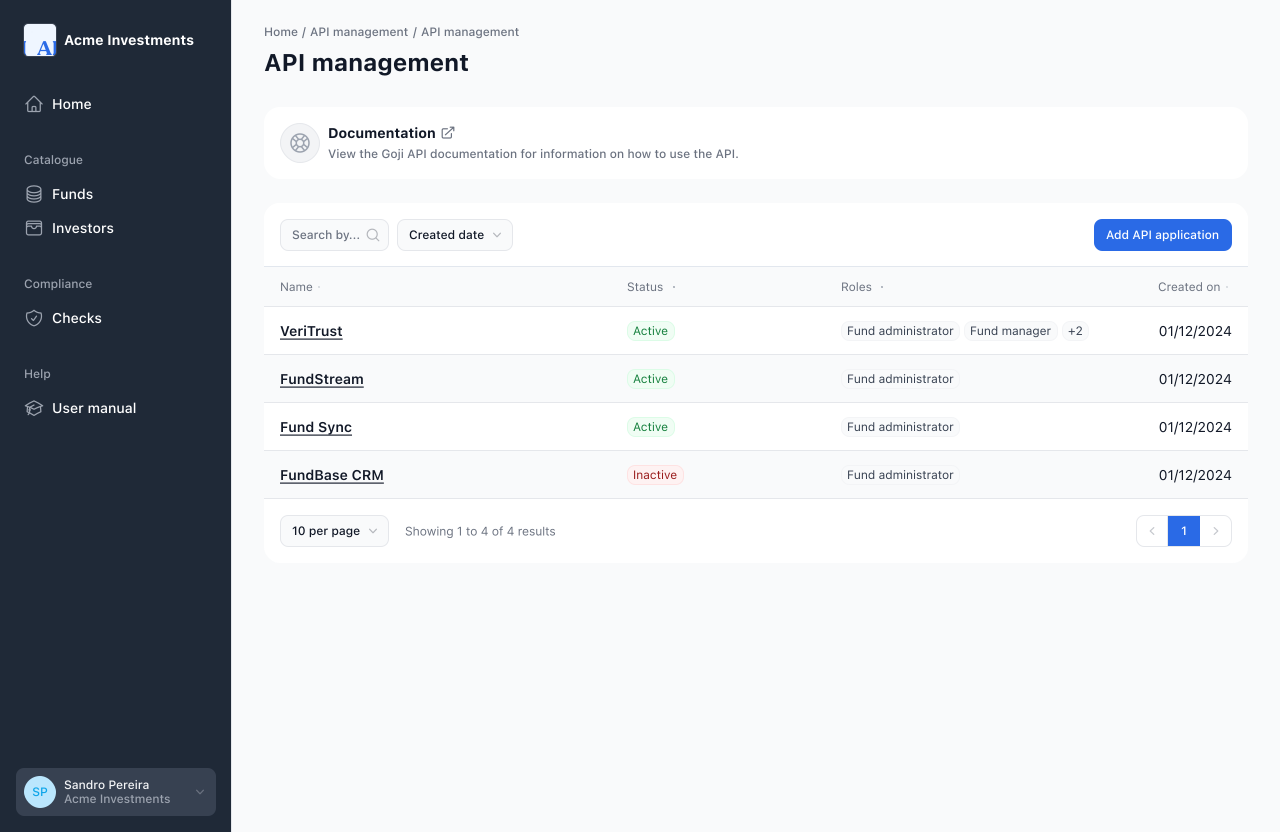 API-led connectivity on the Goji platform
When evaluating integration capabilities, fund administrators should ask whether the platform can:
- connect to existing in-house and third-party systems via API
- synchronise investor and transaction data in real time
- reduce manual re-entry across onboarding, compliance, and reporting workflows
- support straight-through processing across fund administration operations
- allow internal platforms to connect directly without forcing teams into a separate operational model
The broader point is that technology should simplify the operating model. If a platform adds another silo, it undermines efficiency gains. This integration is ultimately what transforms a back-office tool into a front-office value proposition.
How can technology improve the service fund administrators offer clients?
For years, technology has been celebrated as an internal efficiency tool, speeding up processes and freeing teams from manual operations. Now, it is increasingly being considered a core part of the client value proposition.
A more connected platform can help fund administrators deliver a better service to asset manager clients through faster onboarding, more consistent compliance handling, clearer reporting, and smoother investor servicing.
This is where modern infrastructure becomes commercially important. Fund administrators that can combine human expertise with more efficient digital processes are in a stronger position to retain clients and differentiate in a crowded market. This shift in service quality has a direct, measurable impact on the firm’s bottom line.
What is the ROI of a unified investor servicing platform?
The true ROI of a modern platform is found in its ability to decouple investor volume from operational cost. This becomes critical as private funds expand into wealth channels, where the same commitment might come from thousands of smaller investors rather than a single institution.
The breakdown below shows how this might work in practice:
| Metric | Institutional clients | Wealth clients |
| Commitment amount | $50,000,000 | $50,000,000 |
| Ticket size | $50,000,000 | $50,000 |
| Investor count | 1 (pension fund) | 1,000 (HNWIs) |
| KYC/AML checks needed | 1 | 1,000 |
| Est. manual cost | $500 | $500,000 |
| % of total capital | ~0.001% | 1% |
To protect margins, a platform must reduce the manual cost of onboarding and compliance at higher investor volumes.
The strongest platforms change the economics of investor servicing by allowing teams to focus on oversight and client delivery rather than repetitive administration, providing a foundation that can truly scale.
How can fund administrators assess whether an investor servicing platform will scale with them?
Scalability is the ability handle more clients, more funds, more jurisdictions, and more complexity without creating more overhead. The best platforms support scale by combining structured data, reusable workflows, automation, and integrations that keep information moving cleanly across the servicing lifecycle.
Fund administrators should ask whether a platform can:
- support servicing across multiple clients and funds
- handle different investor and entity types
- adapt to new jurisdictions and evolving regulatory requirements
- support higher workflow volumes without multiplying manual effort
- continue evolving through innovation and AI-enabled capabilities
If a solution still depends on people acting as the integration layer between systems, it will struggle to scale cleanly.
What should fund administrators avoid when choosing investor servicing technology?
When making a final selection, administrators should be wary of three specific traps:
- Fragmented point solutions: Tools that digitise one task but increase handoffs and reconciliation work elsewhere.
- Manual dependencies: Workflows that still rely on spreadsheet tracking and reactive document chasing.
- Vague AI claims: Innovative technology that lacks clear governance of human-in-the-loop oversight.
Why choosing the right technology matters
For fund administrators, the right technology platform can improve efficiency, strengthen compliance, reduce manual burden, improve the client and investor experience, and create a more scalable service model.
This is increasingly important in a market defined by higher client expectations and a growing pressure to do more without letting operational costs run wild. The strongest platforms will help fund administrators build a more resilient and commercially competitive operating model for private fund servicing.

FAQ: Is the Goji platform the right choice for you?
How does the Goji platform help fund administrators scale?
Goji provides a fully digitised, white-label, end-to-end investment platform designed to simplify the complexities of the private market investor journey. By consolidating the entire servicing lifecycle into a single operating model, the Goji platform enables fund administrators to scale effectively without a linear increase in headcount.
Can fund administrators automate manual tasks with Goji AI workflows?
Yes, Goji enables fund administrators to automate repetitive administrative tasks through proprietary AI-enabled workflows and AI agents that act as an extension of the operations team. These purpose-built AI workflows and agents handle time-intensive processes such as instantly extracting and validating data from complex KYC packs and generating autonomous capital calls. This allows highly skilled professionals to shift from manual executors to strategic supervisors, freeing them to focus on higher-value client engagement.
How does Goji ensure compliance and human oversight for AI?
Goji maintains rigorous risk management by treating AI as a governed execution layer that requires explicit human approval before any information is populated in the platform. This ‘human-in-the-loop’ approach allows administrators to dictate the exact balance of automation and oversight, ensuring that every AI-generated output is audited by an expert. This ensures that even as operations accelerate, your firm maintains the strict governance required in a highly regulated industry.
How does the Goji platform eliminate the operational burden of paper-based processes?
The Goji platform replaces slow, paper-based methods with standardised, digital processes that reduce operational risk and friction. By digitising your investor servicing journey end-to-end, providing AI-enabled efficiency, and integrating with your back-office systems, the Goji platform transforms your workflows. Key features include:
- Efficient onboarding and KYC: Manage KYC and AML requirements at scale across multiple jurisdictions to ensure compliance without compromising speed.
- Intelligent AI workflows: Employ purpose-built AI agents to autonomously execute repetitive tasks, such as data extraction and validation, while maintaining human oversight.
- Seamless system integration: Connect via robust APIs to accounting platforms and third-party systems to streamline all fund operations and reduce manual data re-entry.
- Centralised reporting and dashboards: Provide transparent, real-time access to fund performance and customisable dashboards for better-informed decision-making.
- Digital document management: Centralise, share, and e-sign critical investment materials and agreements securely. Control access, leverage pre-populated data, and ensure compliance for streamlined workflows.
- Automated transactions: Provide investors with real-time visibility into their investment activity with accurate transaction data. Automate capital calls and distributions.
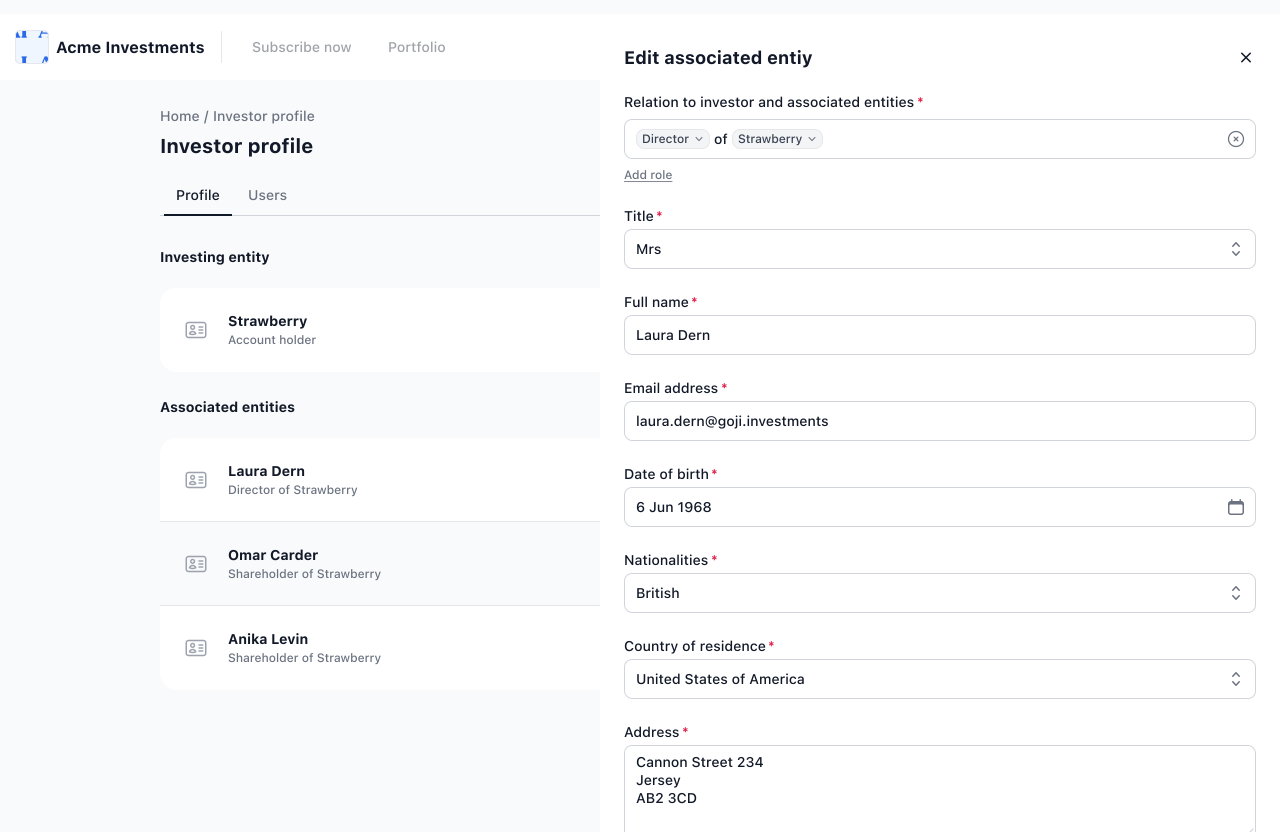
- Reusable investor profiles: Capture KYC/AML data once to be reused across multiple fund subscriptions, significantly accelerating the investment process.
Does Goji's platform integrate with existing fund accounting systems?
Goji supports seamless integration with existing in-house and third-party systems through robust APIs and real-time data synchronisation capabilities. These integrations eliminate manual data re-entry by automating the flow of investor and transaction data between the Goji platform and back-office infrastructure.
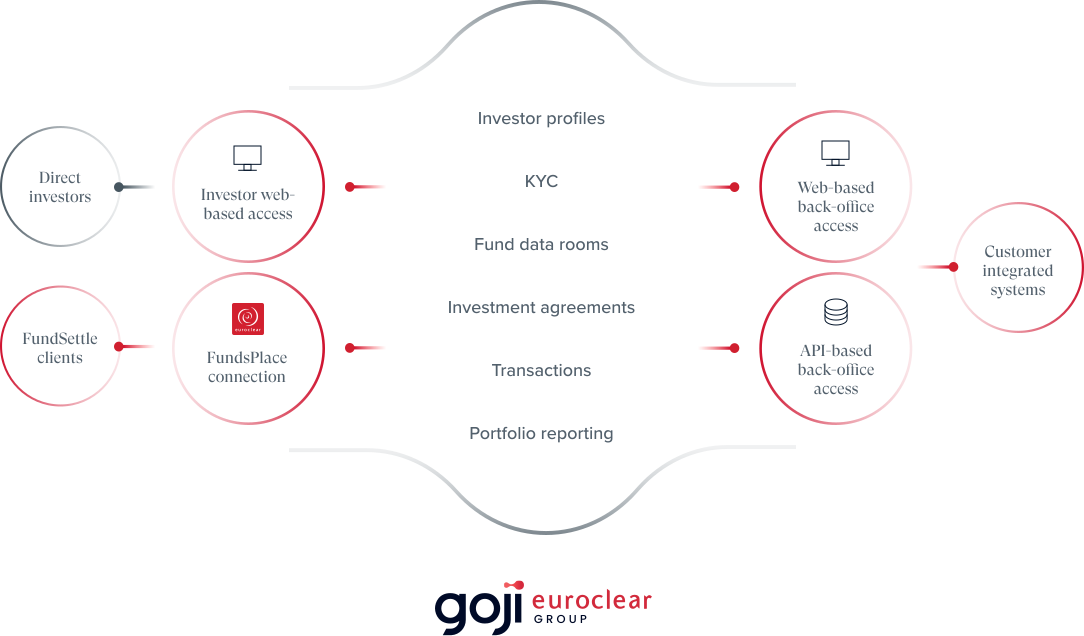
Moreover, as part of the Euroclear group, Goji enables connectivity to Euroclear’s extensive distribution network of over 3,000 distributors, providing a unique value proposition to your fund manager clients.
What are the benefits of Goji’s Euroclear connectivity for fund administrators?
As part of the Euroclear group, Goji allows fund administrators to offer their asset manager clients access to Euroclear FundsPlace, a global network of 3,000 distributors, through a single operating model. This partnership provides unparalleled reach into new investor segments and jurisdictions while leveraging the strength and stability of Euroclear’s established market infrastructure.